A tight race ahead in Spain’s historic election

A tight race ahead in Spain’s historic election

A glance at opinion polls in Spanish newspapers for the past few months would convince you that nobody really has any clue what will happen the day after Spaniards go to the polls to elect their new prime minister in just under three week’s time on 20th December.

It is without doubt the start of a new political era in Spain – a four-horse race ending the to-ing and fro-ing between the two traditional socialist and conservative parties, PSOE and PP. But anything more than a sketchy outline and you’re playing the fickle game of political predictions.
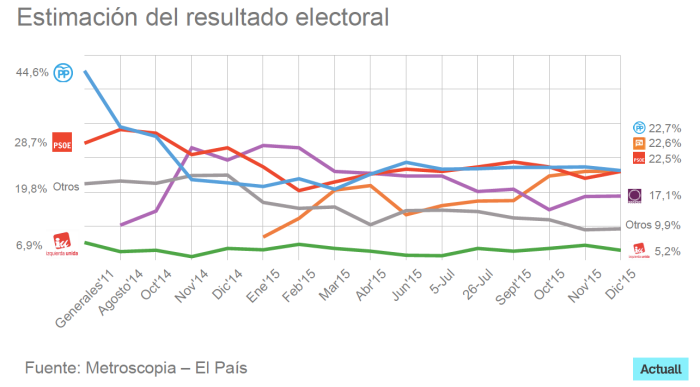
Metroscopia-ElPais_Diciembre2015
Political deadlock in the polls between Spain’s ruling conservatives, the Socialist opposition and centre-right newcomer Ciudadanos

The new centre-right Ciudadanos and leftist Podemos parties have everything to gain in December’s vote as they fight for their first seats in parliament’s lower house after great successes in European and local elections. Are they really the new mainstream left and right of politics – or just a protest vote content with pointing the finger at previous governments?

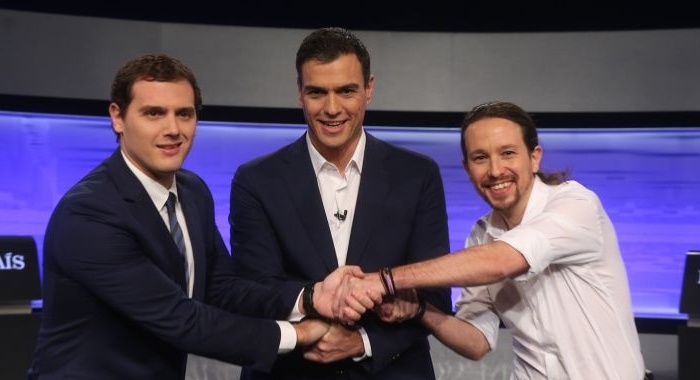
Earlier tonight, the leaders of three of the parties battled it out in an online debate hosted by Spain’s leading newspaper El País.

That’s right – three leaders, not four. Spain’s prime minister Mariano Rajoy has made no secret of the fact he dislikes debates, especially against the two new political kids on the block.

He says to Spaniards that he doesn’t need to debate with his younger and far less experienced rivals. It’s a tactic to set himself out of the crowd that may just work out.

So, the debate empty chaired Rajoy. Instead, he appeared on Spanish news with a one-on-one political grilling. But the debate continued despite this elephant in the room.
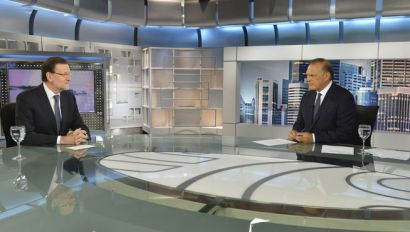
entrevista-mariano-rajoy-piqueras_MDSIMA20151125_0319_21
Prime Minister Mariano Rajoy, the absent leader in tonight’s debate

What Spaniards will be doing in the next few weeks is testing the credibility of their political leader hopefuls, as they do the rounds on television shows and appear at noisy campaign rallies.

How far will these untried and untested new parties stand up to scrutiny and be able to govern a nation of over 40 million, managing its economic recovery and the existential debate of Spain given the calls for independence in Catalonia?

Prime Minister Mariano Rajoy has played a clever game in campaigning on Spain’s unity and his government’s work in steadying the ship of the economy.

He’s hoping that will stand up to his political rivals who talk of proposals and solutions without ever having been in power.

At the same time, the spectre of corruption scandals and a poor record in solving Spain’s massive unemployment problem – at 22 per cent – will be unavoidable.

What was apparent from tonight’s debate was the unanimity in building a “new politics”. What was also clear is that there are many different proposals.
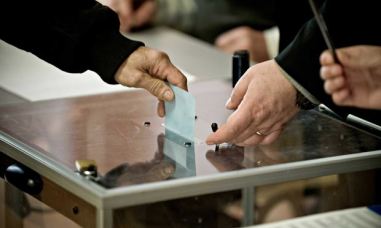
French ballot box

It went right down to Spain’s response to ISIS. Both PSOE and Ciudadanos insisted Spain couldn’t be left out of the Western alliance to bomb Islamic State. Podemos’ policy, meanwhile, stuck out like a sore thumb. Iglesias asked – what did bombs solve in Iraq or Libya? He insisted the group’s arms and finances had to be hit instead.

What is certain is that Spain is likely to be in political deadlock come the end of the year. No one party at the moment has a majority and a coalition agreement of some kind will probably need to be found.

But any pact has already been ruled out by Ciudadanos, whose leader Albert Rivera says he won’t prop up any party, instead holding them account in an opposition role.

Rivera is campaigning on a break with what the “traditional” parties have done to Spain.

They want to create a “new era”, a “new project” for the country. It’s a move which has caused their share of the vote to rocket, as the hopes of Podemos have dipped, peaking far too soon.

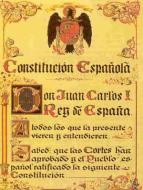
The climate of uncertainty about the future of Spain on a map- read the independence movement in Catalonia – raises the debate around Spain’s constitution, drawn up in 1978 and which has been left untouched since the transition to democracy following the death of Franco.
constitution-day-in-spain-21435549
Spain’s 1978 Constitution, written three years after the death of Franco

Parties agreed about reforming it, but differences lie in where to draw the line on independence. The leaders talked of reform, dialogue, political regeneration, a new Spain. It makes for so many soundbites.

A poll published on Sunday showed a three-way tie between the ruling PP party, the Socialist opposition and newcomer Ciudadanos, the squiggly lines converging to a single point – 22 per cent – redrawing the political map.

It’s just another clue that many in Spain still don’t know who to turn to, but what we do know is that they have turned away from the traditional parties – in their droves.

Will 20th December 2015 be remembered for the end of “old” politics and the start of a new page for Spain, or more of the same – for good or for bad?

A country with many economic, social and political challenges, it is a moment of history in the making.

More: A look at the demographics behind Spanish opinion polls – El Español (in Spanish)
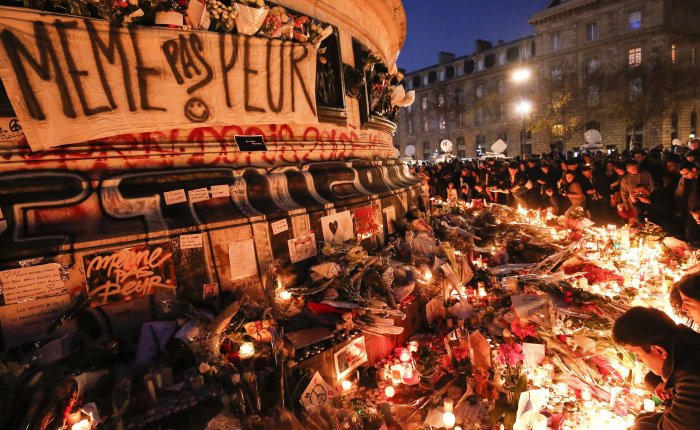


What next for Paris?

What next for Paris?

A nation still in mourning after Friday’s attacks, with many in Paris unsure what will happen next – this the second attack on the city this year, targeting those who were simply enjoying daily life at a concert or restaurant.

So what does the future hold for the capital and the rest of France?

Using clips from BBC radio, I’ve made a 3-minute package asking how Paris and France can get back to normal.


Best sites for European news

2015 has been a watershed year for Europe, battling economic ruin in Greece to the migrant and refugee crises. It has divided Europe along north and south and east and west lines.

Here are the best European news sites to get behind the headlines and understand the often complex workings of the continent.

Politico Europe – a site originally catering for American politics, this Brussels-based site is excellent for analysis and stories you wouldn’t ever usually see elsewhere

Bloomberg Europe – an easy to understand snapshot of European finances and what it means for the continent

Euronews – Based in Lyon, this site provides excellent video and pictures to cover a wide range of stories from Europe

The Guardian – balanced, well-written stories and features from correspondents around the continent

Others:

El País English – Spanish news in English

Financial Times – paywall (£)

France 24

#endweek5blues rally in Cambridge

#endweek5blues rally in Cambridge

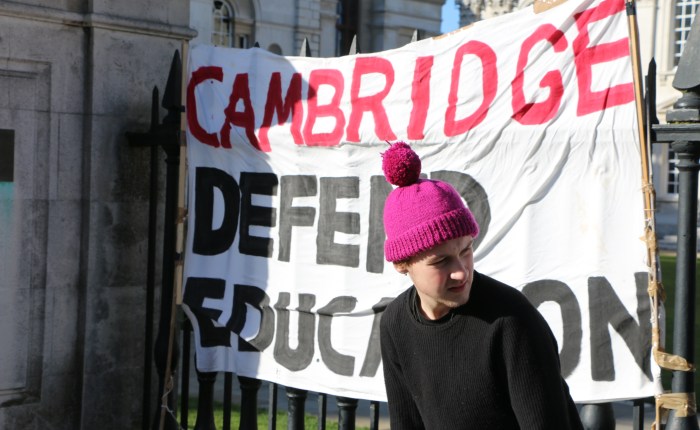
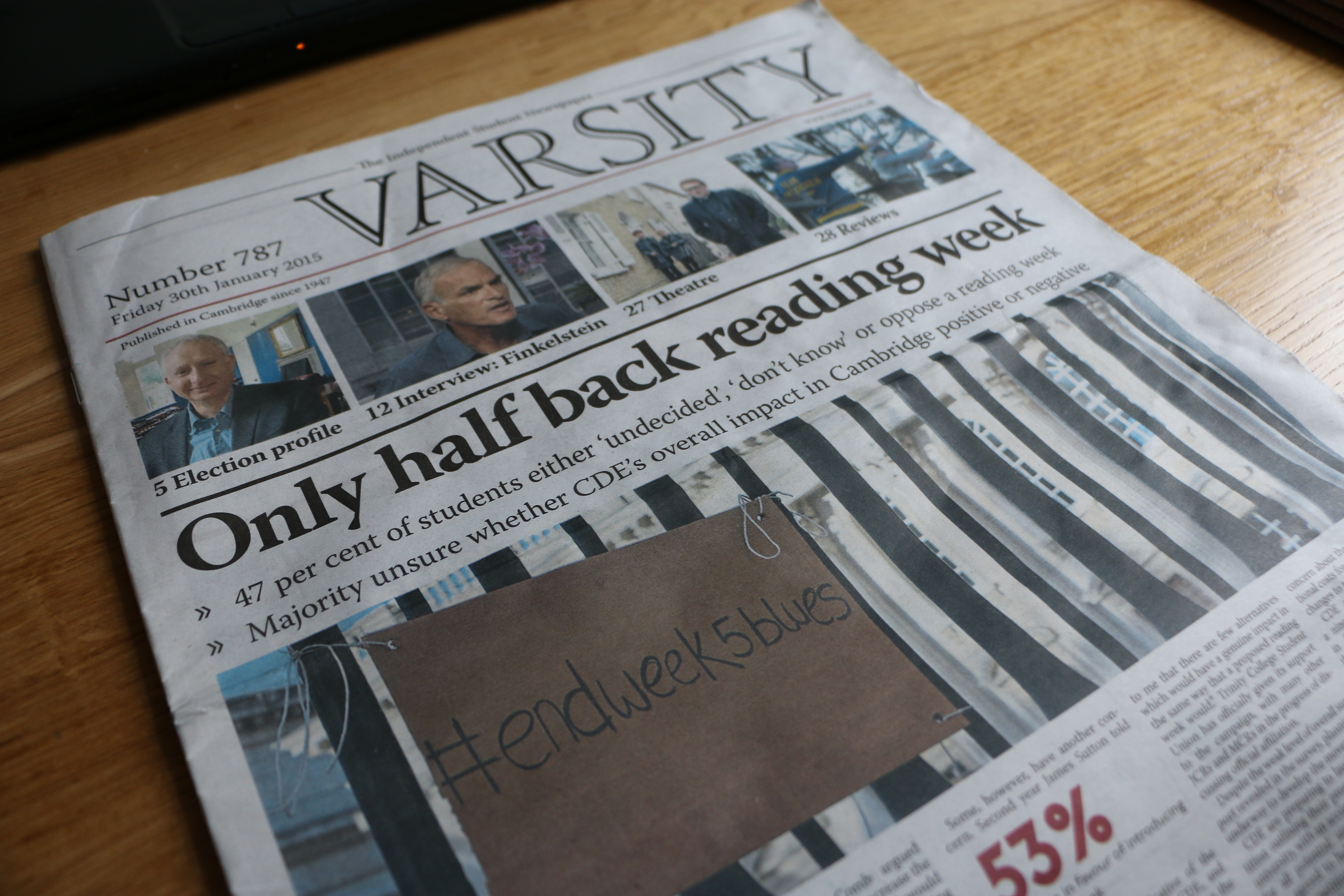
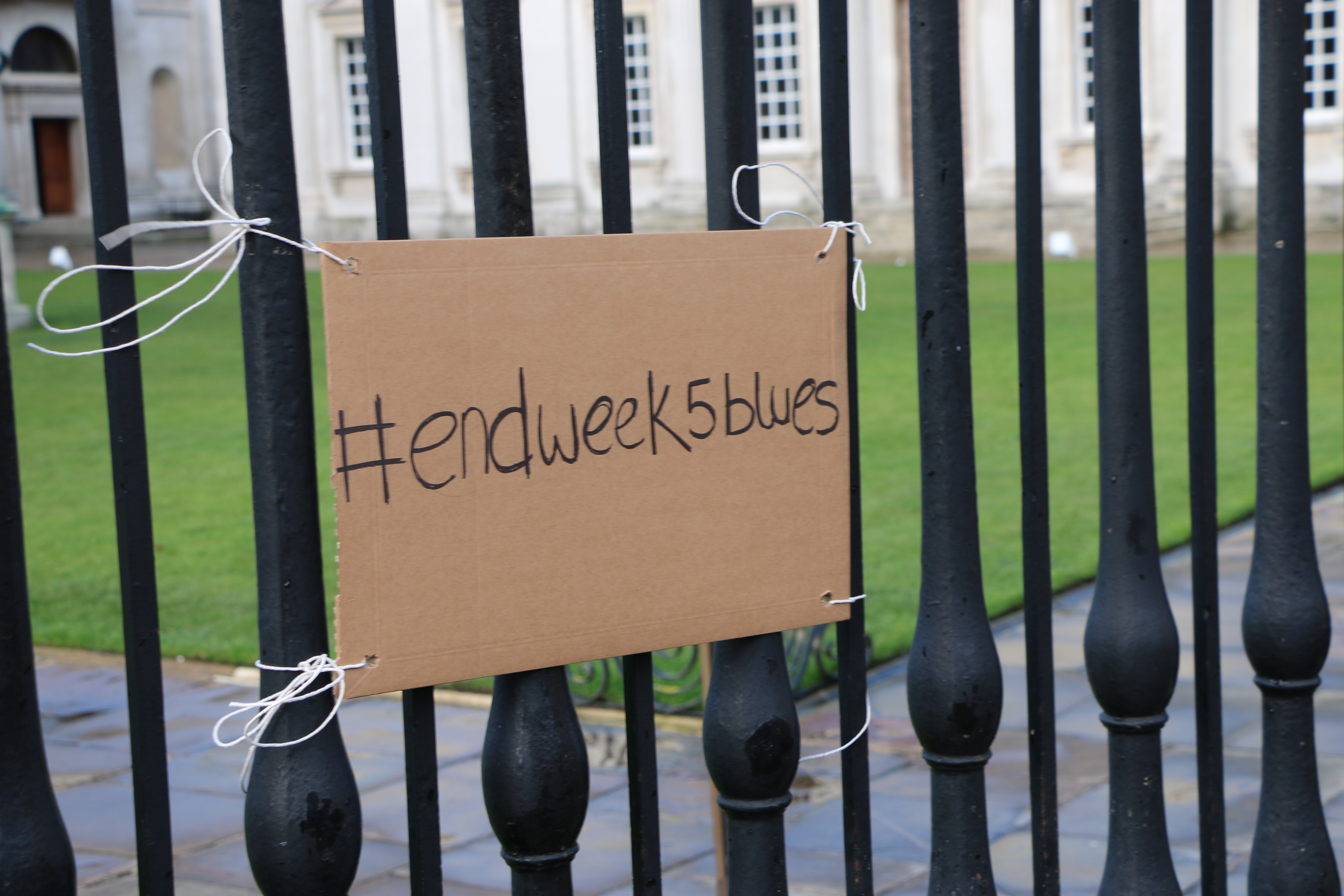
I attended the rally outside the University’s symbolic Senate House, as students activitists from CDE (Cambridge Defend Education) concluded their week of action in support of a reading week. I stayed for an hour, talking to students, organisers and participants in the week-long show of solidarity, as well as taking lots of photos.

Here’s the link to the photo-led article on Varsity:

http://www.varsity.co.uk/news/8303

Ed Balls comes to Cambridge

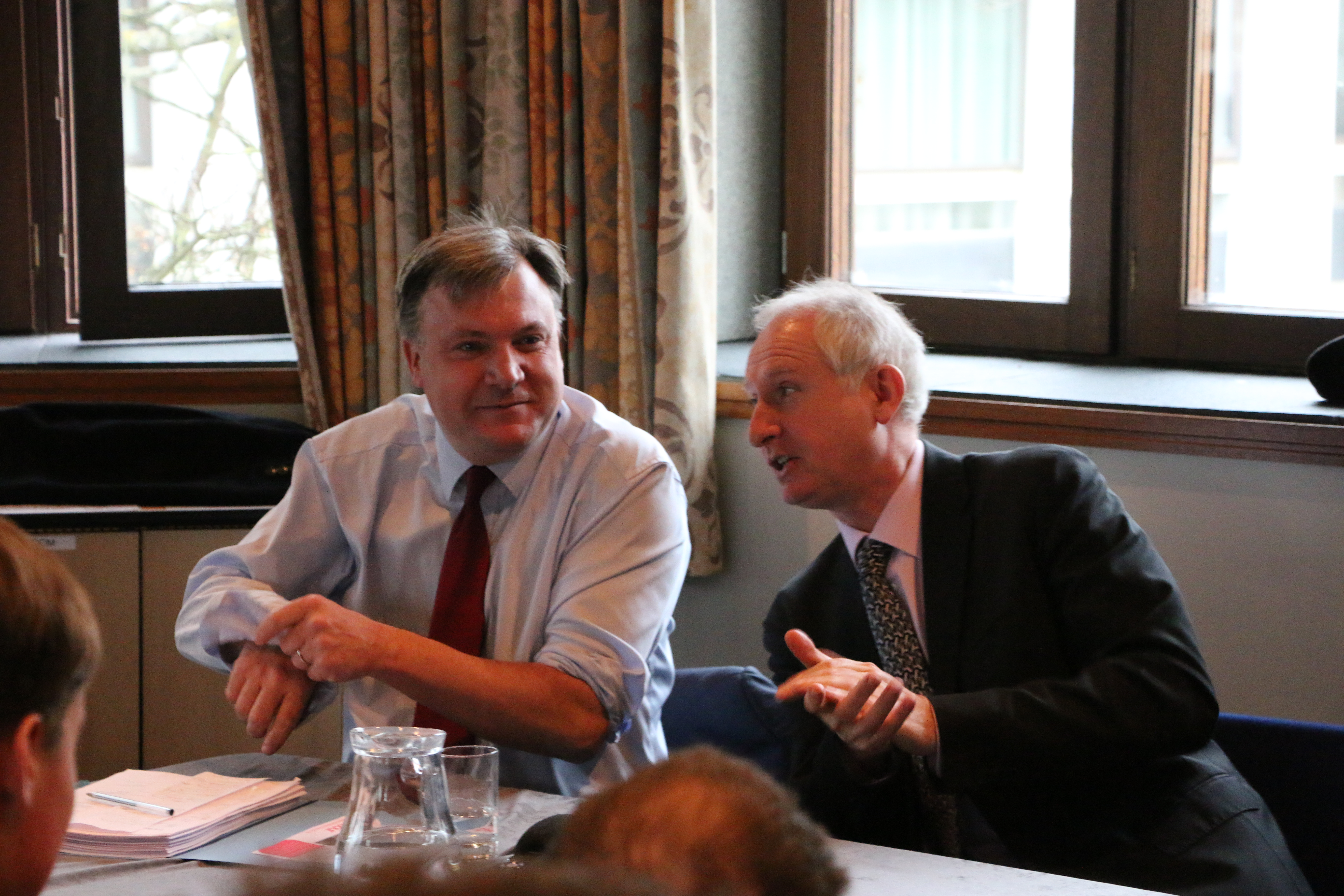
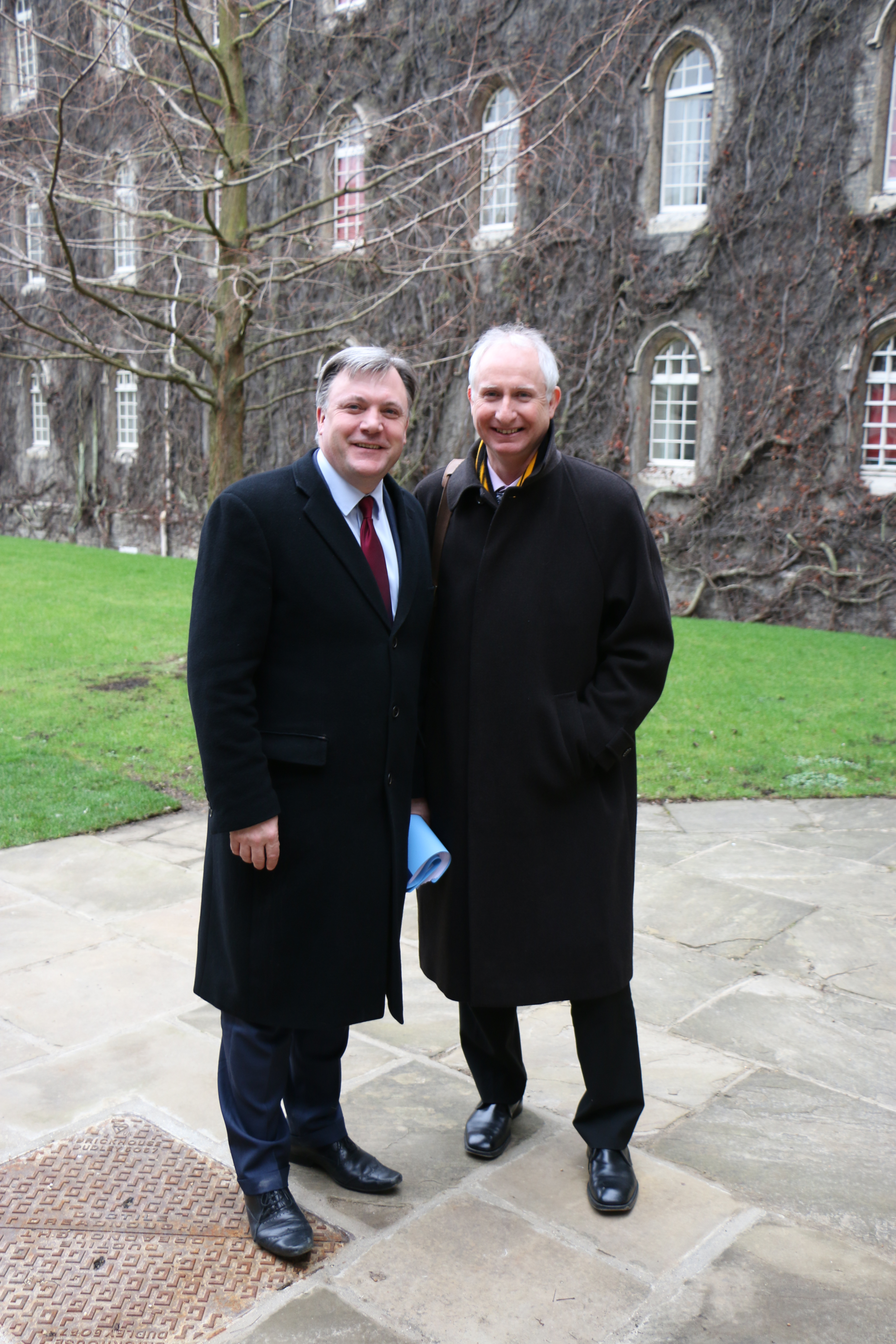
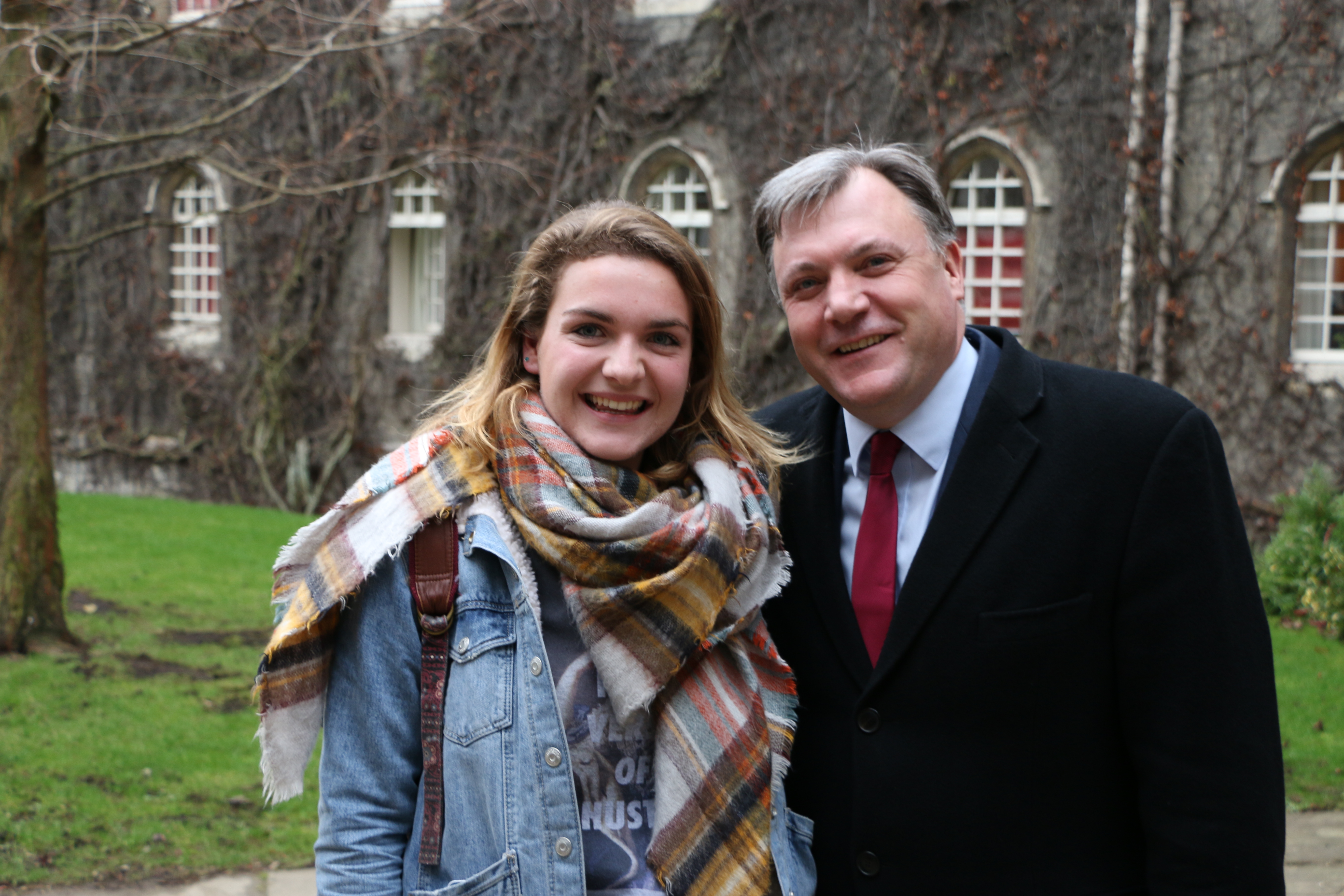
On Thursday last week, the Shadow Chancellor Ed Balls visited Cambridge to speak to students and members of CULC (Cambridge University Labour Club). I accompanied Varsity’s News Editor, with whom I co-ordinated questions, to St John’s, to take photos for what was going to be the following day’s front page. I then wrote up the article quickly, with additional reporting from the News Team, to make it in time for printing.

Here is the article and some of the photos I took:

http://www.varsity.co.uk/news/8257

IMG_0426 IMG_0439 IMG_0440

Photojournalism: #endweek5blues in Cambridge

Photojournalism: #endweek5blues in Cambridge

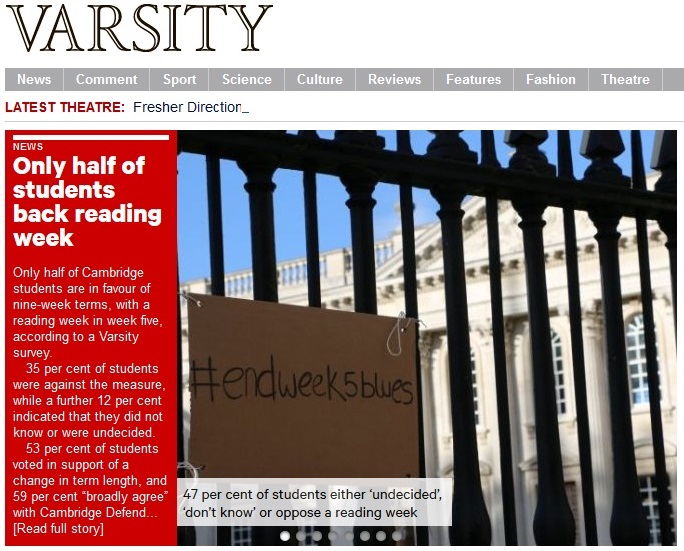
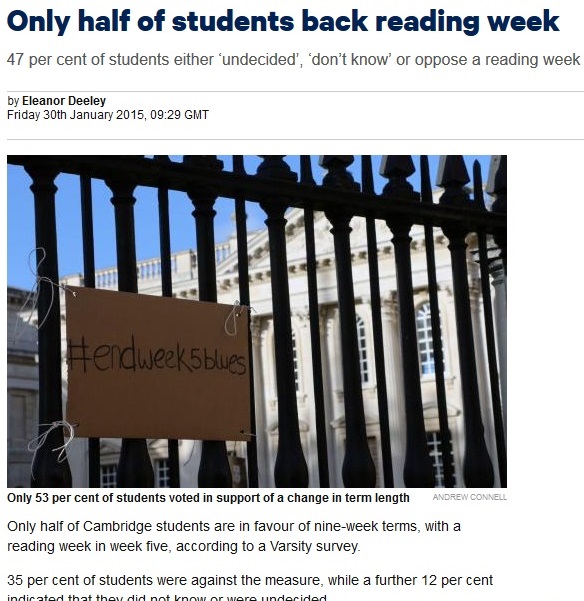
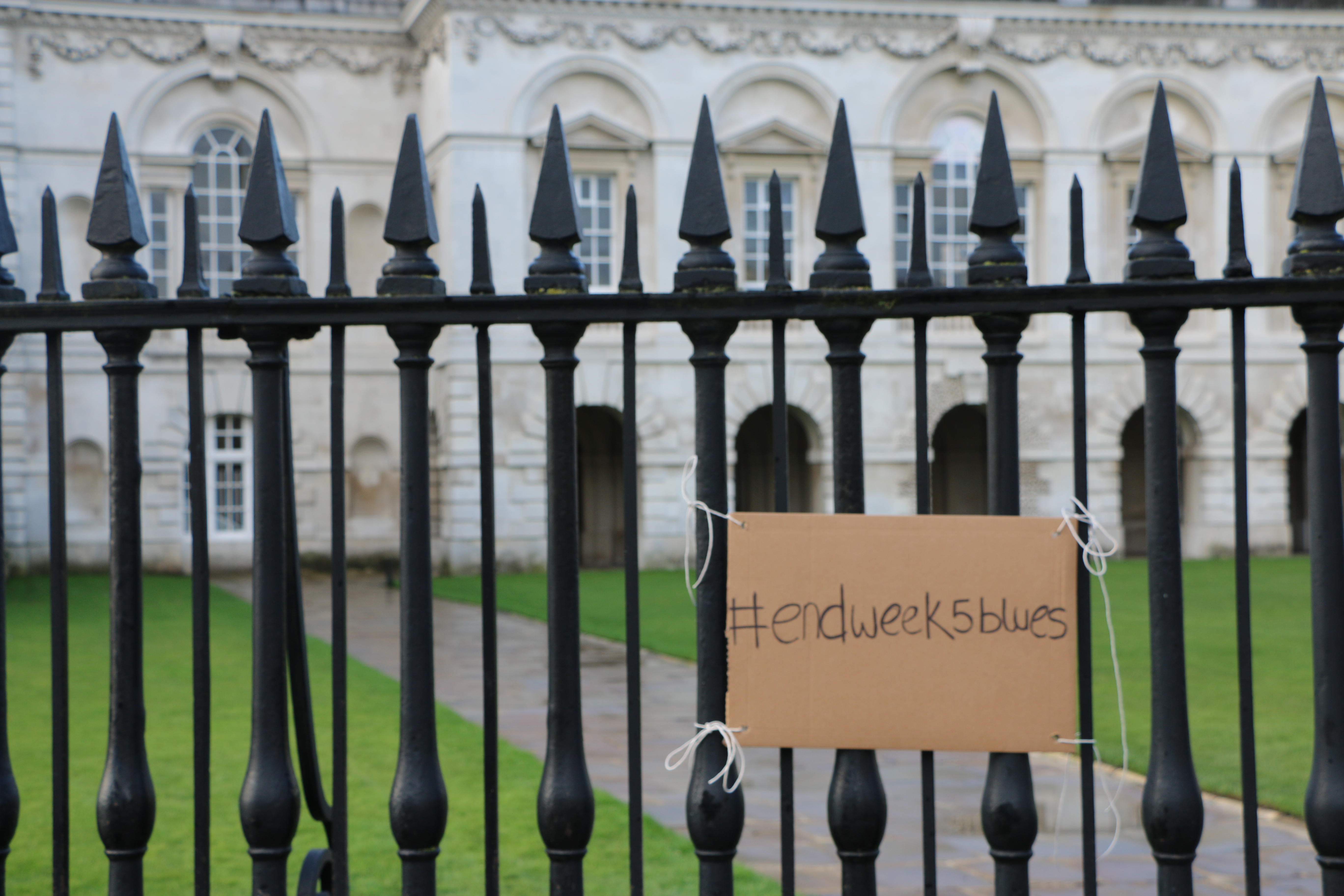
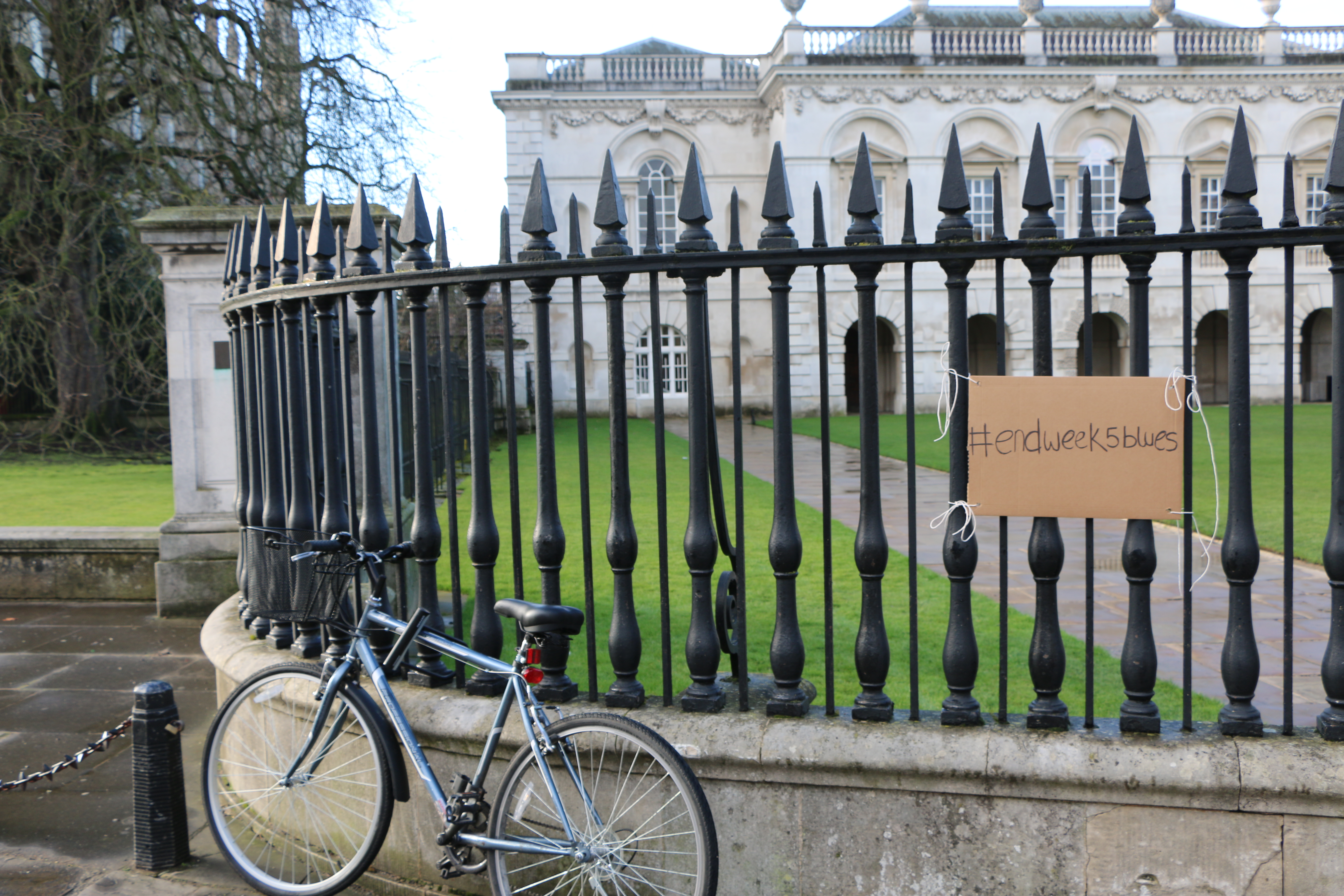
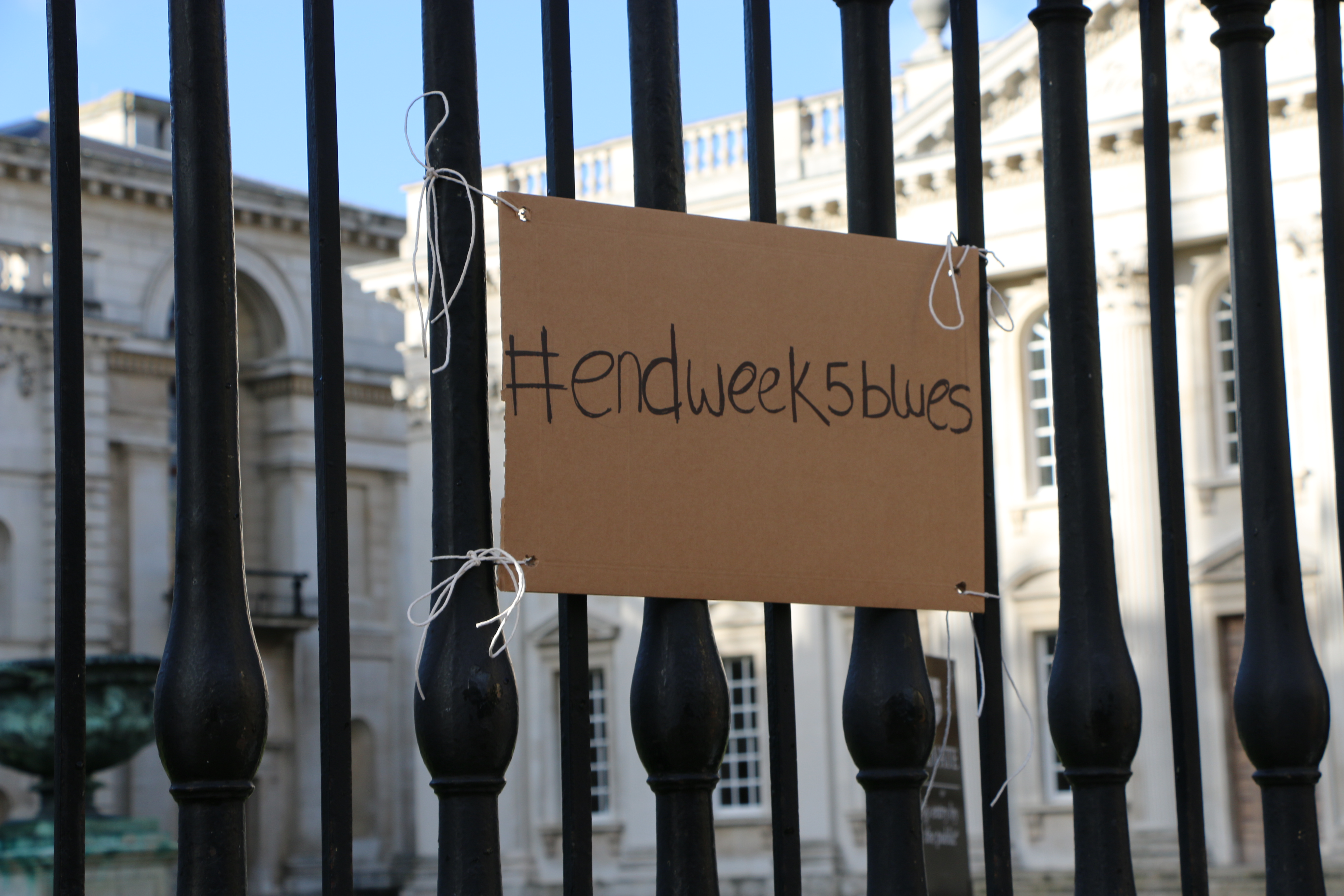
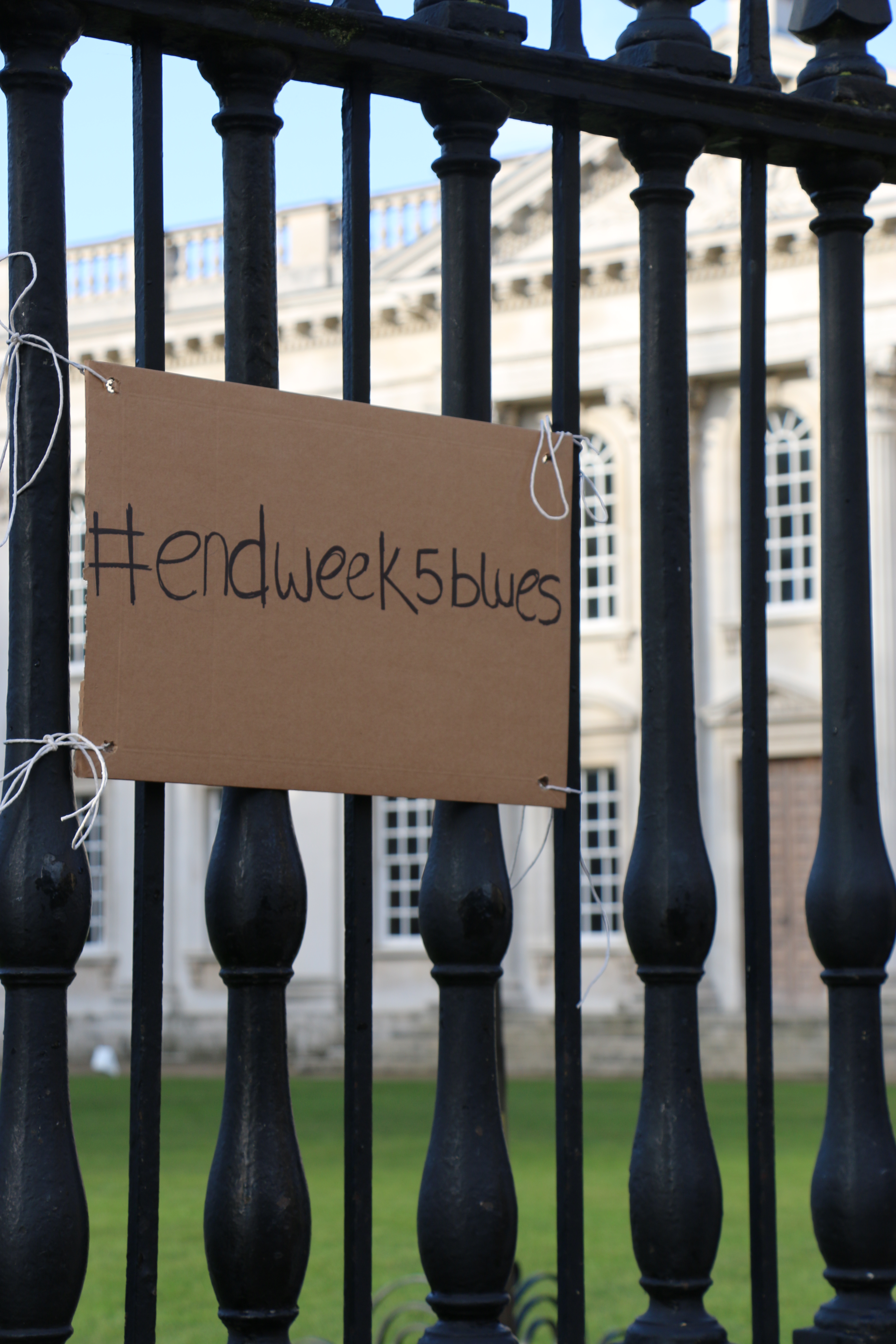
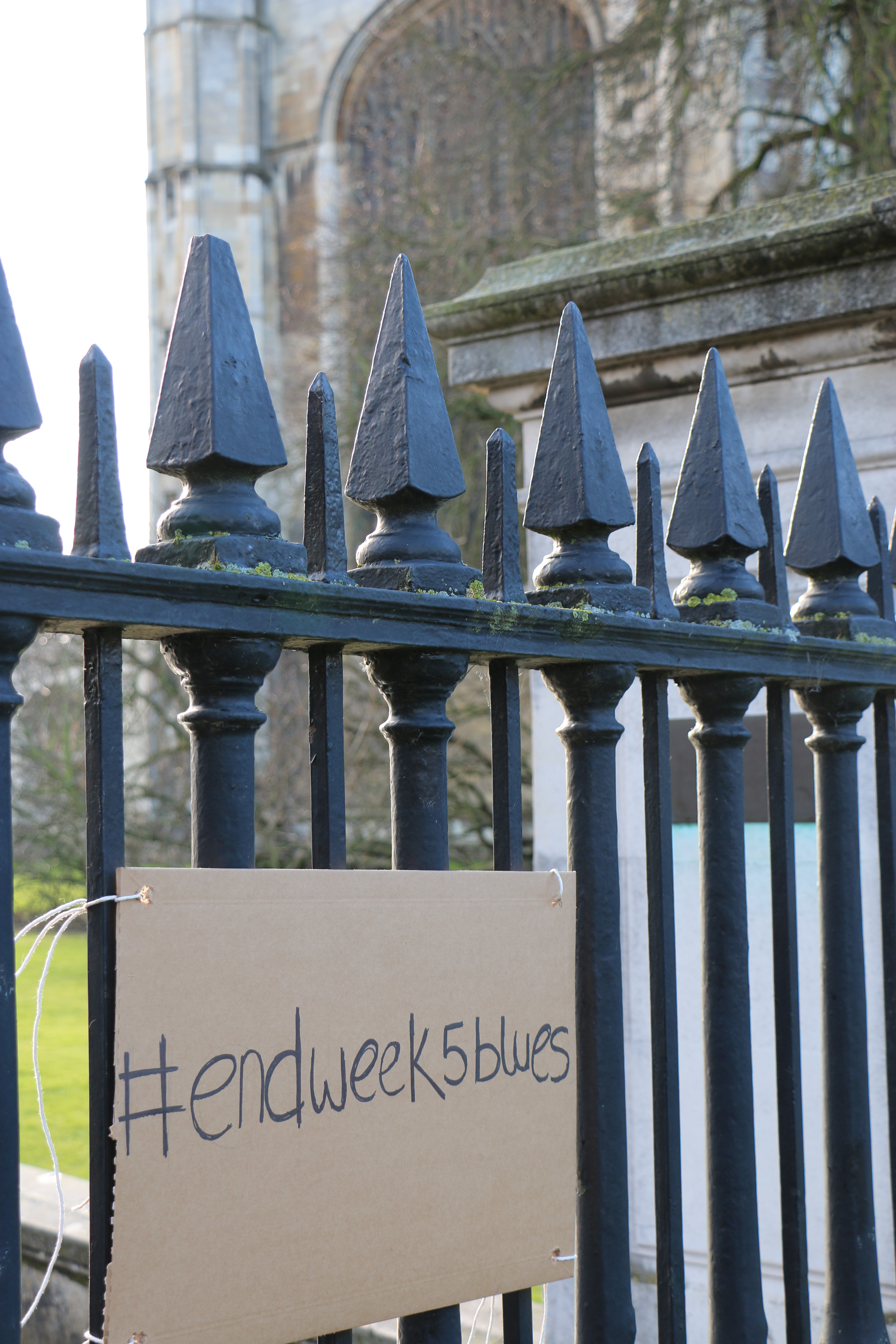
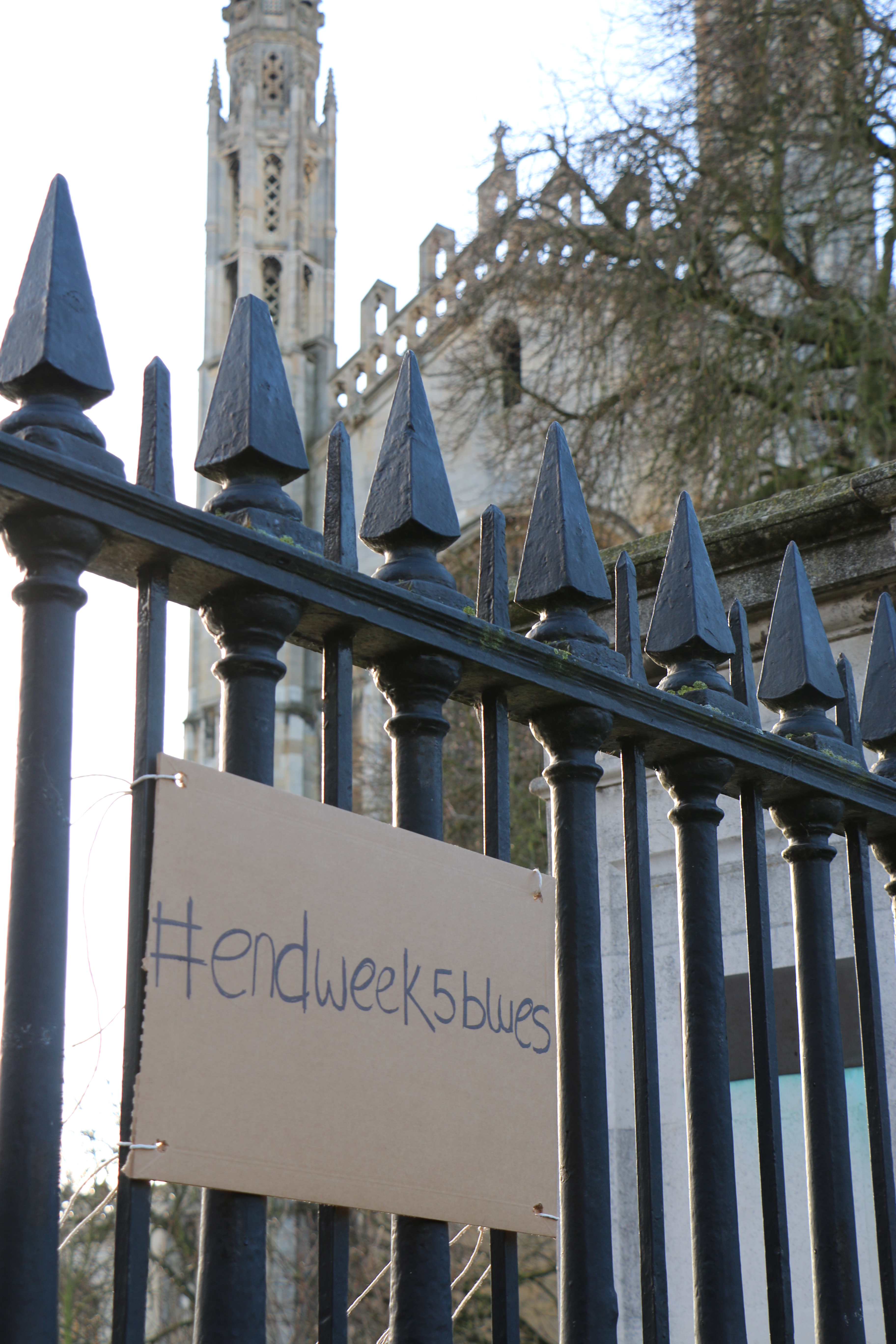
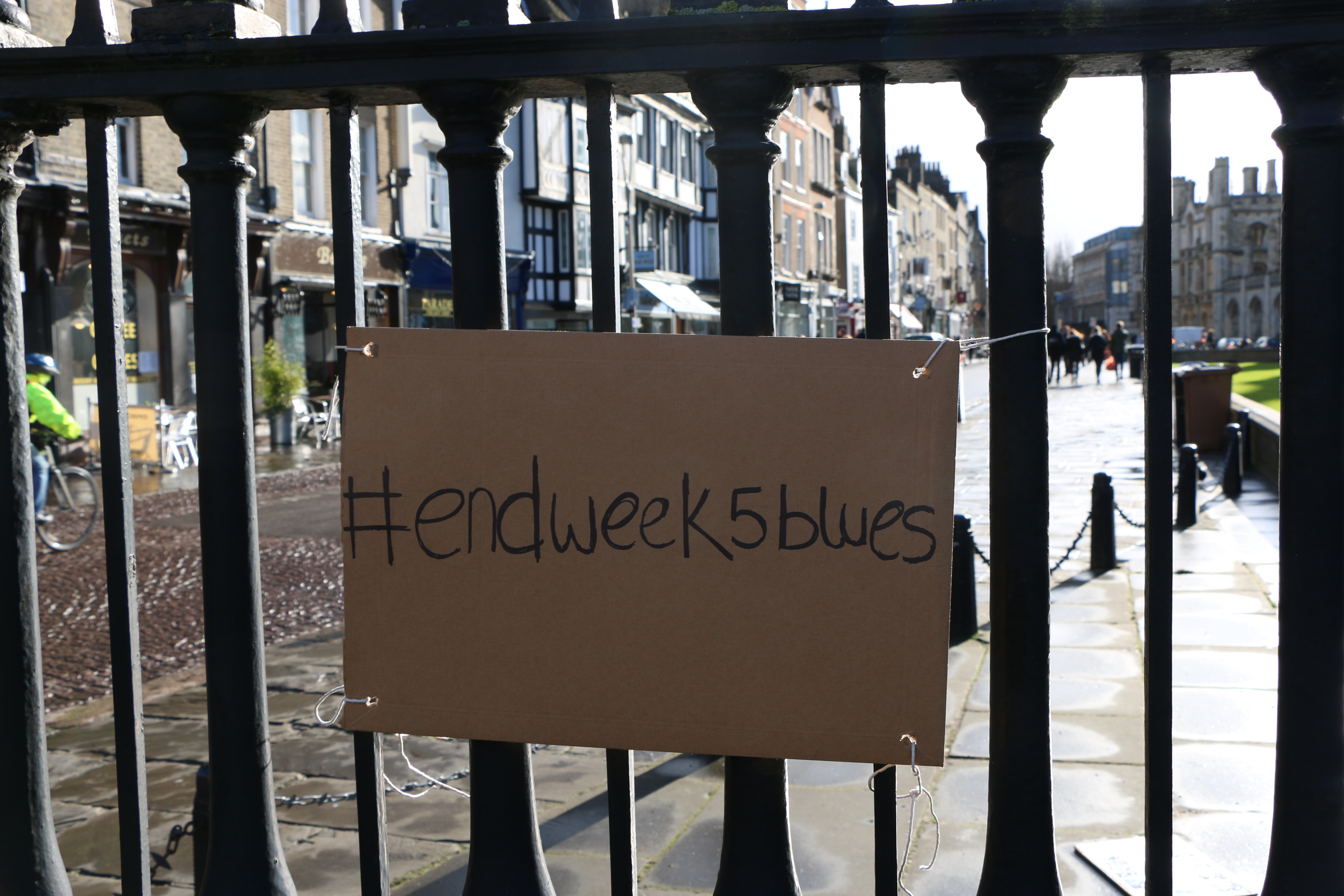
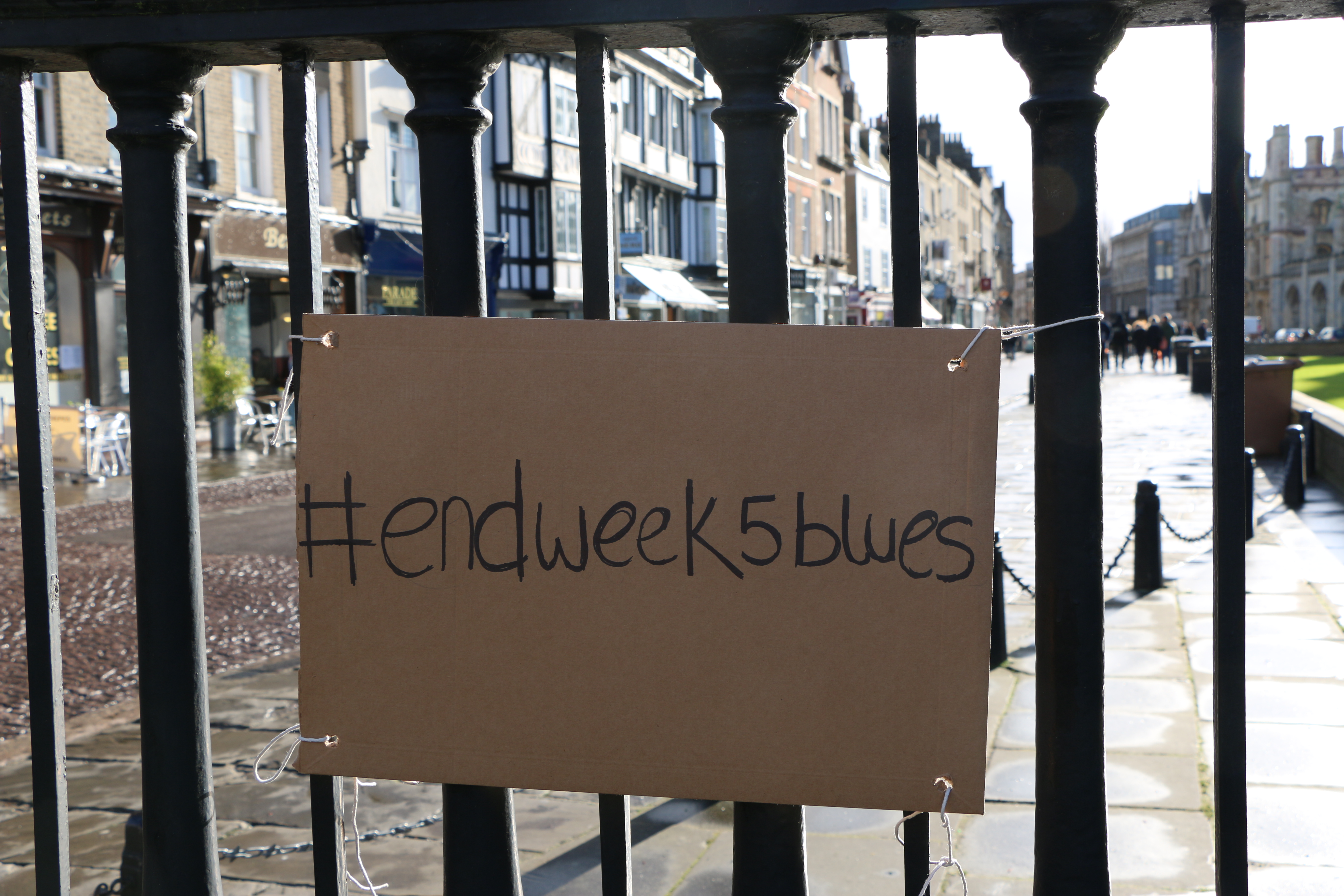
I was asked yesterday by Varsity’s Editor and News Editor to accompany them on King’s Parade to take some ‘staged’ photos to use for this week’s cover of Varsity. The story is about introducing a reading week into Cambridge’s 8-week terms, on the basis that it would better support students with disabilites or mental health conditions, as well as giving all students time to explore their subject further without the pressure of work. It was a particular windy day but then the sun came out! I used manual focus on the camera to get a shallow depth of field and thought about the backgrounds very carefully, producing a mixture of landscape and portrait shots. Here are some of the results:

IMG_0372 IMG_0373 IMG_0376 IMG_0377 IMG_0380 IMG_0382 IMG_0389 IMG_0392 IMG_0398 IMG_0400

University receives “landmark” donation for bursary scheme

University receives “landmark” donation for bursary scheme

A quick article I wrote for Varsity, starting off the print editions to come in the Lent Term.


The University has received a “landmark” donation of over £400,000 which will go towards supporting at least ninety undergraduate students from disadvantaged backgrounds.

A total of £427,500 from the Reuben Foundation has been pledged for the next five years for the award of new Reuben Bursaries, with the sum being equalled by the Cambridge Bursary Scheme.

The University’s Vice-Chancellor, Professor Sir Leszek Borysiewicz, said of the donation: “I’m delighted the Reuben Foundation has enabled us to provide these bursaries, which will make a significant contribution towards the accommodation and subsistence costs of studying at Cambridge.”

“A Cambridge education is a transformational experience, and their generosity will help ensure that basic living costs do not prevent talented students from benefiting from it.”

CUSU’s access and funding officer, Helena Blair, said: “’The prospect of financial difficulties and debt forms one of the largest barriers to people considering higher education as an option. It’s not only about affording living costs – students should have the financial security to thrive equally within their education and access the many opportunities that Cambridge has to offer.”

“Sufficient financial support from a variety of sources including the Cambridge Bursary Scheme is crucial to achieving this, particularly in the case of students from lower-income backgrounds.”

The Reuben Foundation was set up in 2002 by the Reuben Brothers – David and Simon Reuben –  two Indian-born businessmen and philanthropists. The two rarely ever give interviews or appear in the media. The brothers were ranked second in Forbes’ List of billionaires in the UK in 2013 and own a substantial portfolio of UK properties. Both have previously donated to the health and education sectors.

In a statement the brothers said: “We are delighted to see the continued expansion of the Reuben Scholarship Programme, and look forward to a long partnership with Cambridge which will benefit many bright students over the coming years.”

The University has recently received donations from several other foundations which aided the construction of new buildings, including the Department of Chemical Engineering and Biotechnology. Philanthropy has also helped the refurbishment  of the synthetic chemistry laboratory, as well as in the field of research.

Becky Nunn, Access officer at King’s, said: “A bursary can have a massive impact on students receiving it, helping them access as many of the opportunities offered to them whilst studying here as possible, and often significantly reducing the extra stresses which can be placed on a student when finances are a particular issue.

“We hope this donation will help to support more students in this way, and make their experiences of Cambridge even better.”

Simon, a student at King’s, who receives a Cambridge Bursary, said: “Receiving a bursary means that I don’t have to worry about accommodation costs, buying food or missing out on the range of social opportunities that there are on offer. I’m incredibly grateful to all of the donors and Cambridge’s commitment to break down financial barriers that may stop students studying at university.”

A university spokesman said: “Gifts are made by people and organisations who share Cambridge’s commitment to excellence through academic freedom and autonomy. Each one of these gifts represents an act of support that is deeply appreciated.”

Back to reality, back to university for the final year

I’m heading back to Cambridge today for my final year of my languages degree. It’s quite stressful packing up again and getting ready for what will be a busy year of study, but I’m delighted to be getting back to see my friends and familiar surroundings once again after a great year in Barcelona.

I do apologise if the blog is neglected somewhat for a while – I fully expect to be snowed under once again with lots of reading and essays to do, which may well affect my ability to write regularly.

My new camera – Canon 70d

Following on from the advice of the techicians at ITV Granada and sticking to my budget, I invested in a Canon 70D with 18-135mm IS STM lens just before heading back to university. It shoots at full 1080p, 20.2 MP and includes WiFi for transferring photos and video content from the camera to the mobile. The lens so far is absolutely sensational – the AF focus is incredibly quick indeed and makes no noise at all when zooming and focusing. Picture quality is excellent, both on stills and the sharpest of HD video, and handles low light very well.

I’m slowly getting to grips with the many features, this being my first DSLR, and I hope to be able to share some of my results, both stills and video, on the blog very soon.

https://i0.wp.com/media.the-digital-picture.com/Images/Other/Canon-EOS-70D/Canon-EOS-70D-with-18-135mm-Lens.jpg
Canon 70D with 18-135mm lens. Credit: The Digital Picture